

The Complete Handle Material Guide: 9 Materials Every EDC Carrier Should Know
Ever picked up two knives that look almost the same, but one feels totally different in your hand? That's the handle material talking lah. What a handle is made of changes how it grips, how it ages, and how it feels after a long day of carry.
Here's your full field guide. 9 materials, real pros, one honest con each, and real examples you can check out right now.
1. G10

Origin story: G10 started life as an industrial material, a fibreglass laminate developed for electrical insulation, the kind used in circuit boards. Knife makers picked it up in the 1980s and 90s once they realised how tough and grippy it was, and it's been a staple on hard use knives ever since.
Pros:
- Extremely grippy, even wet
- Handles heat, cold, and rain without breaking down
- Doesn't crack, warp, or rot over time
- More affordable than most premium materials
Con: Can feel harsh or scratchy against skin on long carry days.
Examples: The Cold Steel Recon 1 Tanto puts G10 to work on a proper hard use folder. The Zero Tolerance 0350TS shows the same material in a bolder tiger stripe finish.
2. Micarta

Origin story: Micarta goes back even further, invented in 1910 by Westinghouse as an industrial insulating laminate. It found its way into knife and gun grips decades later, prized for how tough it is and how it develops a warm, personal patina the longer you carry it.
Pros:
- Warms up comfortably in the hand
- Ages with a unique patina over time
- Tough and impact resistant
- Classic, traditional look
Con: Absorbs oils and moisture over time, can darken unevenly.
Examples: The Kansept Hazakura pairs black and white micarta with a Japanese inspired design. The Kizer Lieb M is a compact everyday folder built around this material.
3. Titanium

Origin story: Titanium made its way into knives from the aerospace industry, where its strength to weight ratio made it a favourite for aircraft parts. Custom knife makers started experimenting with it in the 1980s and 90s, and it's now a mark of a premium build.
Pros:
- Ultra lightweight
- Fully corrosion proof
- Very strong for its weight
- Doesn't degrade, even after decades
Con: Shows fingerprints and scratches easily, and can feel slippery when wet without texture.
Examples: The Zero Tolerance 0470 is a proper premium titanium folder. The Nitecore NTK05 brings the same material to a tiny keychain knife, confirm handy for daily use.
4. Carbon Fibre

Origin story: Like titanium, carbon fibre made the jump from aerospace and motorsport into knife making once manufacturing techniques matured enough to make it practical. It carries the same appeal as it does on a racecar, incredibly light, incredibly stiff.
Pros:
- Featherlight
- Very stiff, holds its shape well
- Premium, glossy look
- Fully resistant to corrosion
Con: Expensive, and can crack under a hard impact.
Examples: The Kershaw Pub in Carbon Fibre is a fun budget friendly way to try this material. The Spyderco C248CFP Canis shows it on a serious premium folder.
5. Aluminium

Origin story: Aluminium handles have been around since the mid-1900s, but really took off with the rise of lightweight EDC folders. Aircraft grade aluminium alloys, anodized in different colours, became a go to for knife makers wanting strength without the extra weight.
Pros:
- Lightweight
- Available in bold, anodized colours
- Strong relative to its weight
- Lower cost to manufacture than titanium
Con: Gets cold fast in cold weather, and can feel slippery without texture.
Examples: The Kershaw Pub in Black is a compact multitool style folder built on aluminium. The Kershaw Dividend Composite shows off the anodized colour option in olive.
6. Stainless Steel
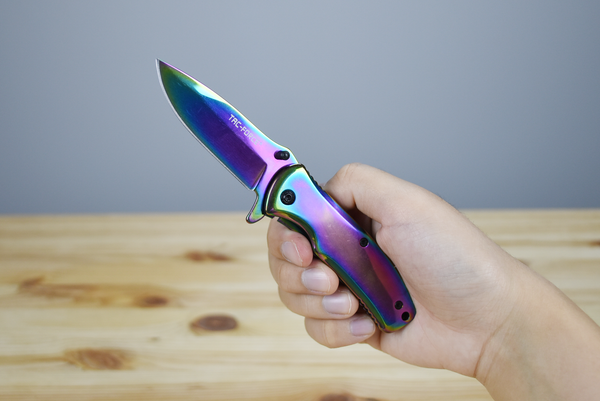
Origin story: Stainless steel itself was invented in 1913, and it wasn't long before knife makers started using it for full metal, integral handles. No scales, no separate material, just one seamless piece of steel from tip to butt.
Pros:
- Extremely durable
- Resists corrosion well
- Adds forward balance many users love
- Essentially indestructible under normal use
Con: Heavy, adds noticeable weight to the whole knife.
Examples: The Ka-Bar Skeleton Knife is a minimalist take on a full steel build. The Kershaw Boilermaker shows the same idea in an all-stainless folder.
7. Wood / Natural

Origin story: The oldest handle material of all. Wood has been used on tools and blades since ancient times, and it's still the material behind traditional slip joints and, closer to home, the classic Malaysian parang.
Pros:
- Classic, warm look
- Unique grain pattern on every piece
- Comfortable, natural feel in hand
- Traditional heritage appeal
Con: Sensitive to moisture, can crack or warp if not sealed and cared for.
Examples: The myparang Lading is a proper local wood handled parang, handmade the traditional way. The Buck 110 Hunter Folder is a wood handled American classic, one of the best selling knives in history.
8. Rubber / TPE

Origin story: Rubber and TPE grips became common as outdoor and rescue knives grew in popularity. Wet, slippery, high stakes situations called for a material that grips no matter what, and rubber delivered exactly that.
Pros:
- Excellent grip, even wet or with gloves
- Absorbs shock well
- Affordable
- Comfortable for extended use
Con: Wears down over time, can turn sticky or perish with age.
Examples: The Cold Steel SRK is built exactly for the wet, hard use conditions this material is made for. The Morakniv Bushcraft Survival Black pairs it with a full bushcraft setup.
9. Synthetic

Origin story: Synthetic handles, usually a glass filled nylon, became popular as mass production knives grew in the mid to late 1900s. Brands wanted a material that was tough, cheap to produce, and consistent, and synthetic scales delivered all three.
Pros:
- Very affordable
- Extremely durable and impact resistant
- Lightweight
- Low maintenance
Con: Cheaper feel and look, scratches show up more easily.
Examples: The Kershaw Swerve is a sturdy everyday folder built on this material. The Cold Steel Tuff Lite shows how tough a synthetic handle can be in a compact size.
So, which material fits your carry?
Nine materials, nine different personalities. Some built for the outdoors, some built for the office desk, some just built to last a lifetime. The best material isn't the fanciest one on paper, it's the one that matches how you actually use your knife every day.